
LVIS Corp.
NeuroMatch
- Design
- Figma
- Zeplin
- Image
- Photoshop
- Illustrator
- Video
- AfterEffects
- Premier Pro
- Frame.io
- Project
- JIRA
- Confluence
What:
NeuroMatch is a medical software capitalizing on the cloud, big data, and machine learning to identify neurological patterns in EEG (Electroencephalogram) data to produce models that help physicians diagnose brain diseases.
Why:
The time-consuming nature of reading EEG creates a significant road block to efficient, accessible neurological care. The NeuroMatch reading interface, detection tools, and trend models help doctors find the needle in the haystack within patient data to support diagnosis faster with greater accuracy.
How:
As a junior UX designer while NeuroMatch was in alpha stage I worked under the design lead to help develop the design system and interface during user research and competitor analysis.
- Analyzed user studies to produce profiles that informed design decisions
- Created components, layouts, wireframes, and prototypes in Figma
- Managed and maintained the design library
- Performed user interviews with technicians and physicians
- Worked with product manager, engineers, and science team to develop design requirements
- Provided feature design proposals to project and science teams
Case Study: NeuroMatch
Problem
- Delayed diagnoses due to lack of biomarker-based precision
- FDA compliance hurdles preventing modern software/hardware updates
- High cognitive burden from multi-system workflows
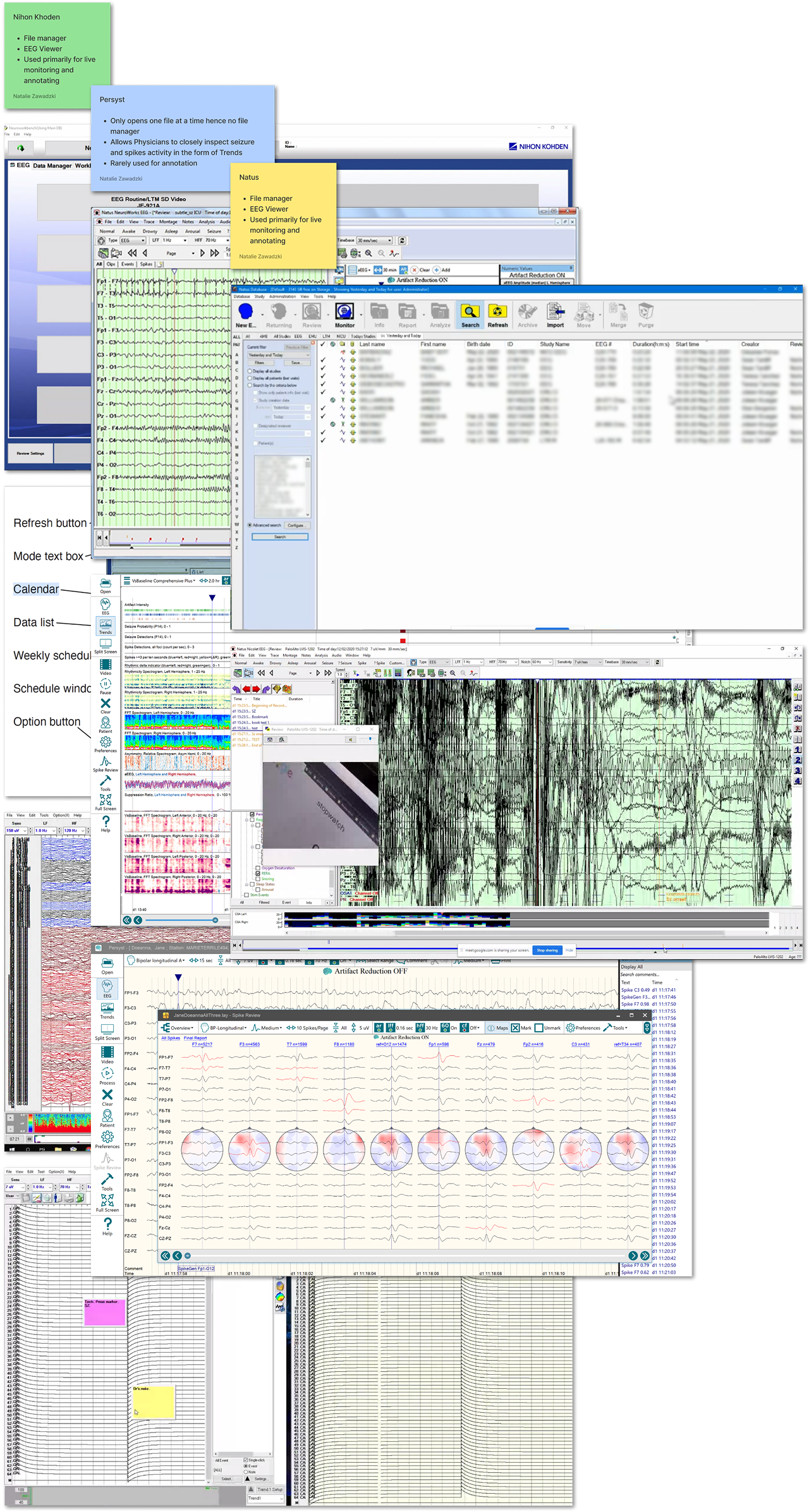
- Use of separate software for records, EEG viewing, analysis, and reporting
- Proprietary EEG tools from different hardware vendors with outdated UX
- Custom hospital workarounds resulting in inefficient manual workflows
Research
- Conducted interviews and observations to understand role-specific workflows
- Identified unique user types: Monitor, Technician, Physician
- Mapped overlapping responsibilities, workflow stages, and pain points
Direction
- Establish seamless transitions between reading and reporting
- Prioritize clarity of user contributions and work ownership
- Leverage online accessibility for transparency and collaboration
- Built workflow diagrams to align Design, Development, and Science teams
Validation
- Created interactive prototypes in Figma based on real user workflows
- Focused on signal visualization, annotation, and report editing flows per role
- Ran validation sessions with hospital staff across multiple iterations
Outcome
- Reduced tool-switching across roles
- Increased clarity of roles and user ownership in report flows
- Reduced apprehensions around AI-driven tools through transparency
This project was design within a highly complex technical field, under strict regulatory systems. Keeping the user experience focused, efficient, and modernized under these constraints was the greatest challenge.